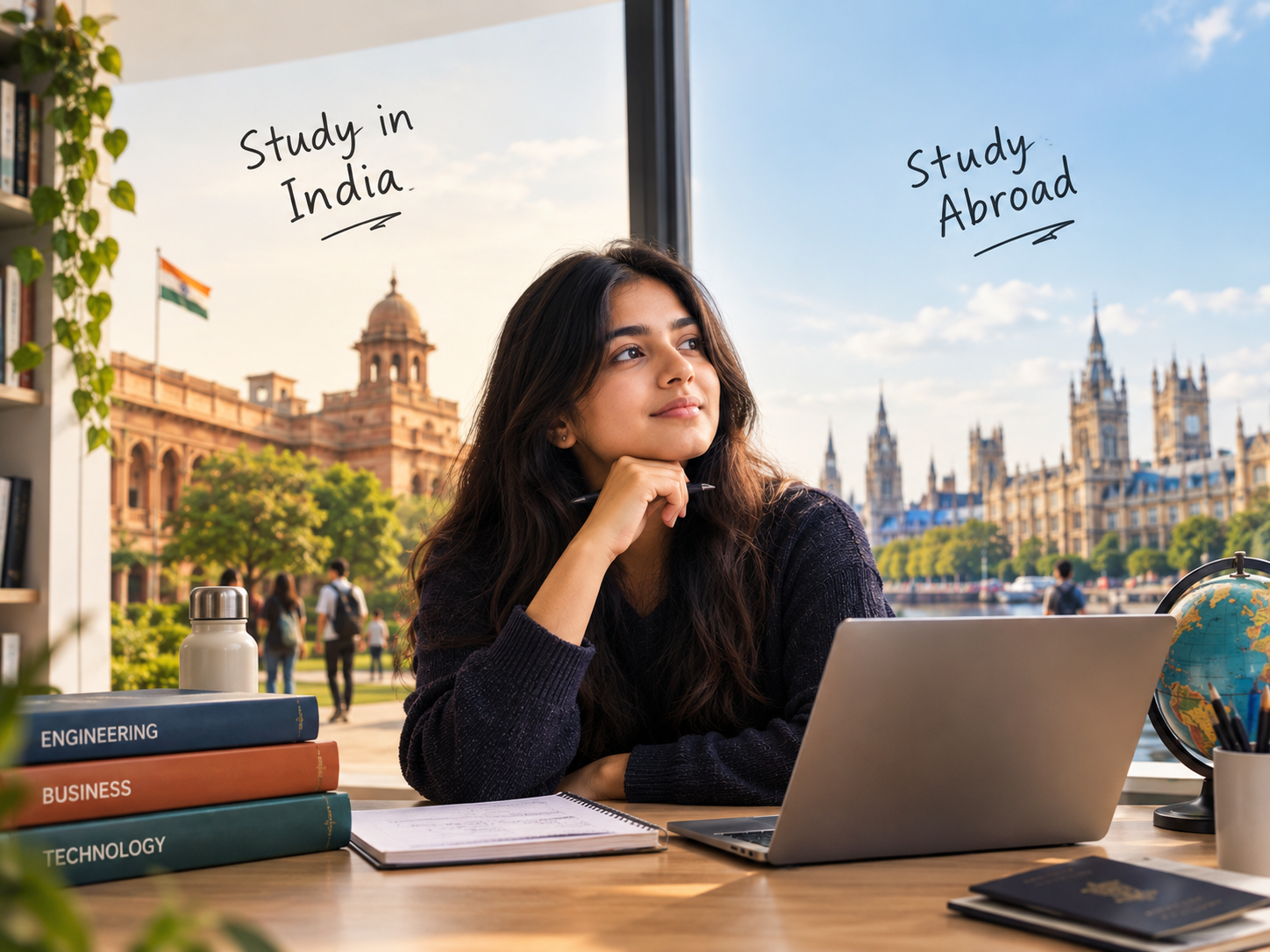



Planning to study abroad after graduation? It can be an exciting next step, but choosing a country or university immediately may not be the best place to start. Many students finish their bachelor’s degree and immediately start looking at universities, but there are a few important steps to take before applying.
Here’s a simple guide to help you get started.
1. Decide What You Want to Study
The first step is to choose the right course for your career goals. You can explore a Master’s degree, postgraduate diploma, or other specialised programs depending on your academic background and future plans.
For example, a BCom graduate may explore courses in Finance, Business Analytics, Accounting or Management, while an engineering graduate could consider fields such as Data Science, AI, Computer Science or specialised engineering programs.
2. Shortlist Your Study Destinations
Once you know your course, start comparing countries based on factors such as tuition fees, living costs, university options, work opportunities and post-study rules.
Countries such as Germany, Ireland, France, the UK, Australia, Canada, Japan and South Korea offer different opportunities for international students. The right choice depends on your course, budget, academic profile and career plans.
3. Check University Eligibility
Universities may consider your bachelor’s degree, academic transcripts, subject background and English-language proficiency. Depending on the programme, you may also need work experience, a portfolio or other requirements.
If you want to understand how to build a stronger application, check out our How to Build a Strong Profile for Study Abroad guide.
4. Prepare for Required Tests
Depending on your chosen country and university, you may need an English proficiency test such as IELTS, TOEFL or PTE. Some programs may also require tests such as the GRE or GMAT.
Check the requirements of each university early so you have enough time to prepare and complete the tests before application deadlines.
5. Calculate Your Budget
Studying abroad involves more than tuition fees. You should also consider accommodation, food, insurance, travel, visa expenses and other living costs.
Create a realistic budget before applying. Also research scholarships, tuition waivers and education loan options that may help reduce your overall financial burden.
If you need a student visa, you may also have to provide proof that you can financially support yourself during your studies. For example, Canada has specific financial requirements for international students. You can check the official Canada financial-support requirements for the latest information.
6. Start Preparing Your Documents
Common application documents can include academic transcripts, degree certificates, passport, English test scores, CV, Statement of Purpose (SOP) and Letters of Recommendation (LORs).
Preparing these documents early can make the application process much smoother.
Final Thoughts
Studying abroad after graduation can open up opportunities for higher education and international career exposure. But the process becomes much easier when you start with the right course, country and budget instead of applying randomly.
Start with your career goal, then choose your course, country and universities accordingly.
If you are planning to study abroad after graduation and need help choosing the right options, connect with EduNirvana for personalised study abroad guidance.