


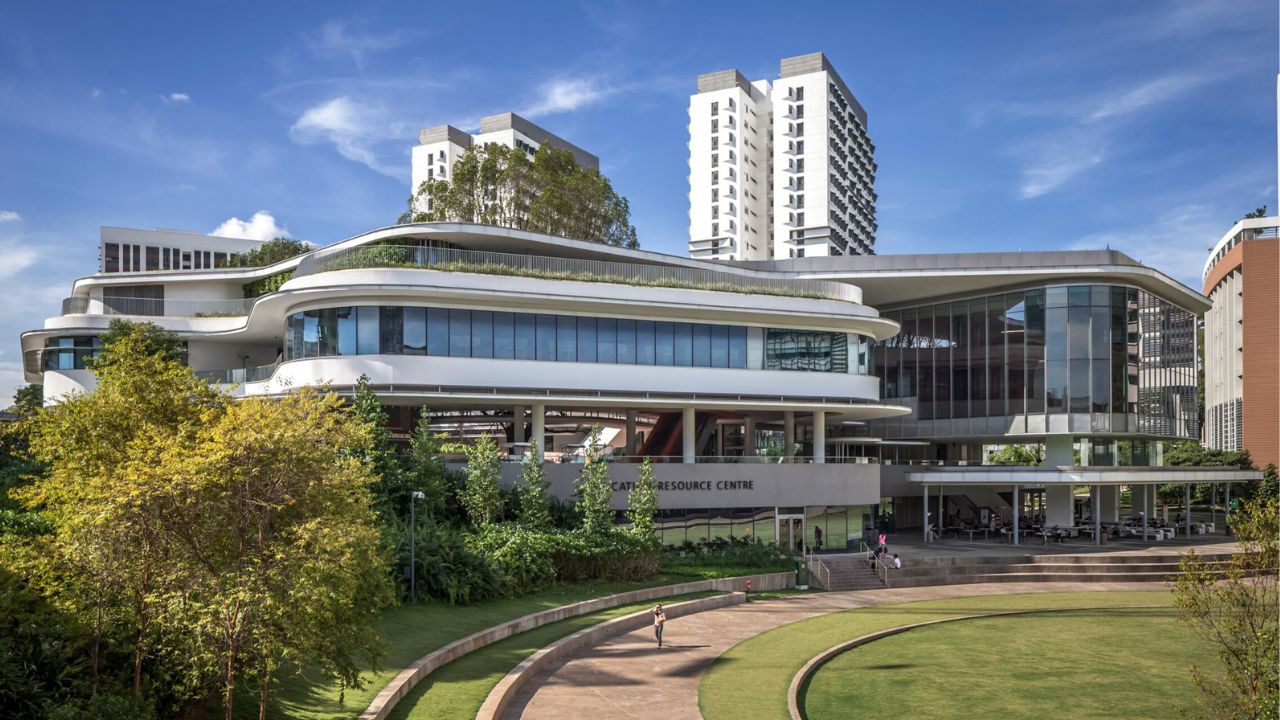
Singapore attracts over 65,000 international students each year, thanks to its top-ranked universities, English-taught programs, and reputation as Asia’s leading business hub. Ranked 11th globally in the QS Best Student Cities 2026 list, it offers a high-quality education system, world-class institutions, and a vibrant multicultural environment. This guide covers everything you need to know about studying in Singapore in 2026, including top universities, popular programs, tuition fees, eligibility, and more.
Study in Singapore: Top Universities, Programs, Fees & More
Top Universities in Singapore
- National University of Singapore (NUS)
- Nanyang Technological University (NTU)
- Singapore Management University (SMU)
- Singapore University of Technology and Design (SUTD)
- Singapore Institute of Technology (SIT)
Popular Programs to Study in Singapore
English is the main medium of instruction across all programs, facilitating accessibility for international students. Here are the top ones:
- Engineering
- Business and Management
- Information Technology
- Life Sciences and Medicine
- Social Sciences and Humanities
Read More: Study in Austria: Top Universities, Programs, Fees & More
Tuition Fees Overview
Tuition fees in Singapore range widely, depending on the university and program. On average, between SGD 15,000 and SGD 45,000 per year for international students. Scholarships and government grants may be available to outstanding students, easing financial burdens.
Eligibility and Admission Requirements
- Completed high school (12 years of education) or a bachelor’s degree from a recognized institution
- English proficiency: IELTS 6.5/TOEFL 85-100/PTE/Duolingo (mandatory for non-English medium)
- Academic transcripts and good grades (minimum 50%+ or equivalent)
- Possible entrance tests (SAT/ACT/GMAT/GRE), interviews, or work experience for professional programs
Application Process and Tips
- Start applications 6-9 months before your intended start date, as admission and visa procedures may take time.
- Prepare and submit required documents, including transcripts, letters of recommendation, a statement of purpose, and English test scores.
- Consider using university international offices to support your application processing.
- Explore scholarship options early to enhance funding opportunities.
Living in Singapore
Singapore offers a safe, modern, and multicultural living environment. On average, student living expenses range from SGD 12,000–1,5000 per year, covering housing, food, transport, and personal needs. The city-state’s efficient public transport, clean neighbourhoods, and rich cultural activity provide a rewarding student lifestyle. Part-time work options exist for students holding a valid Student Pass, usually capped at 16 hours per week.
Read More: Top 5 Study Abroad Destinations in Europe 2026
Conclusion
Studying in Singapore in 2026 offers a unique combination of world-renowned academic excellence, cutting-edge research opportunities, affordability, and vibrant multicultural life. Whether you aim to specialise in engineering, business, IT, or life sciences, Singapore’s top universities provide a gateway to global careers and lifelong networks. Early planning, meeting eligibility criteria, and exploring scholarships will help make your study experience in Singapore fulfilling and affordable.